
UK Overall Prediction
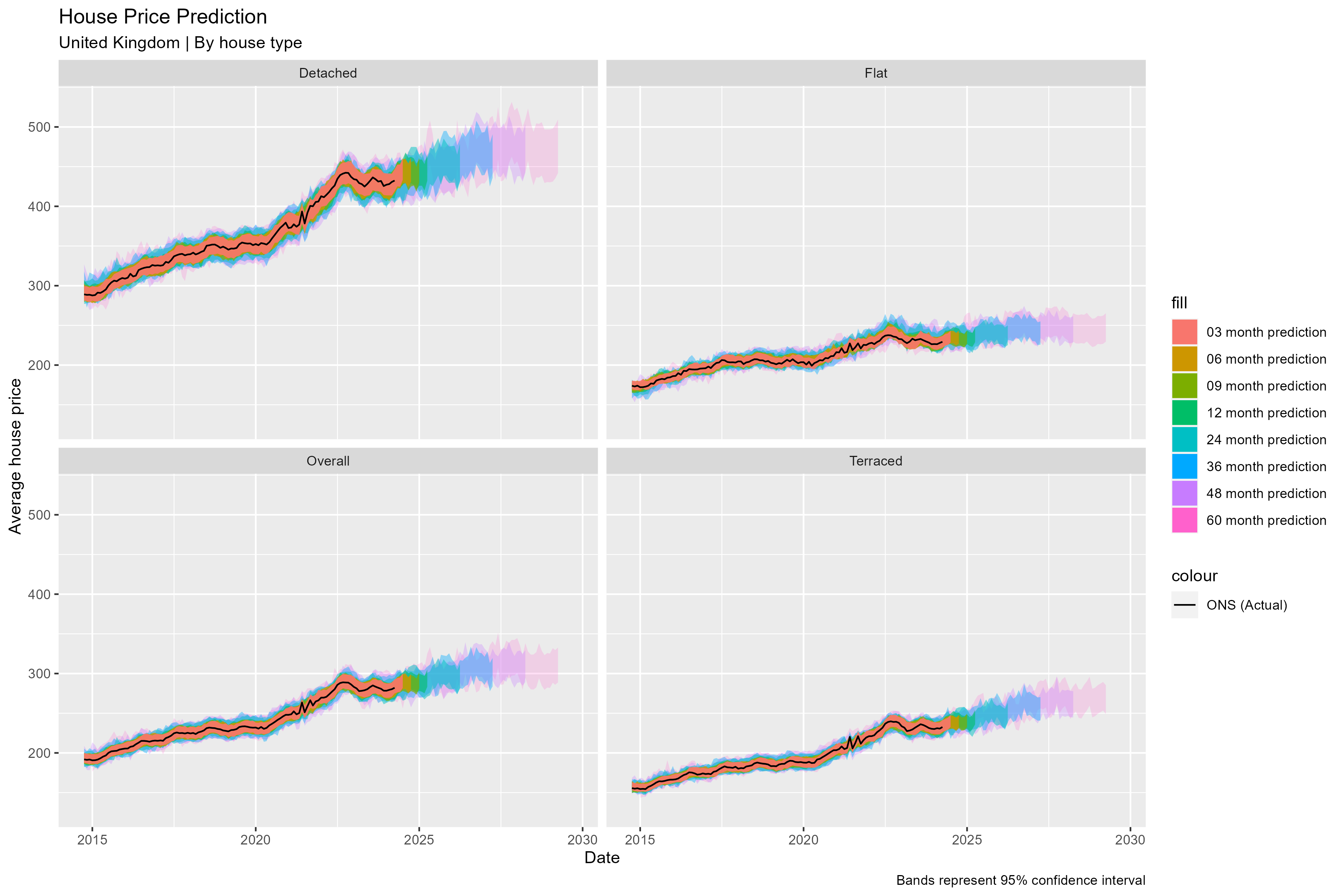
As we move further into 2024, UK house prices continue to capture attention, with nuanced forecasts over the next several years. Based on the data available, it’s clear that the UK housing market is likely to experience both growth and contraction, depending on regional dynamics and property types. From the general outlook, detached homes appear to be leading the charge in terms of growth, while flats, particularly in certain regions, face potential stagnation or even declines.
Global economic factors such as inflation, interest rates, and energy costs are likely to play a significant role in shaping the property market in the UK over the coming years. The recent interest rate hikes, designed to control inflation, could impact mortgage affordability, slowing demand in certain areas. On the other hand, population shifts towards suburban and less dense areas continue to drive growth, particularly for larger homes.
The forecast for detached homes, especially in London and some suburban regions, remains robust, with substantial growth projected over the next five years. This growth might be tempered by more conservative prospects for flats and terraced homes in certain regions, especially those that have already seen steep increases in recent years.
Regional Predictions
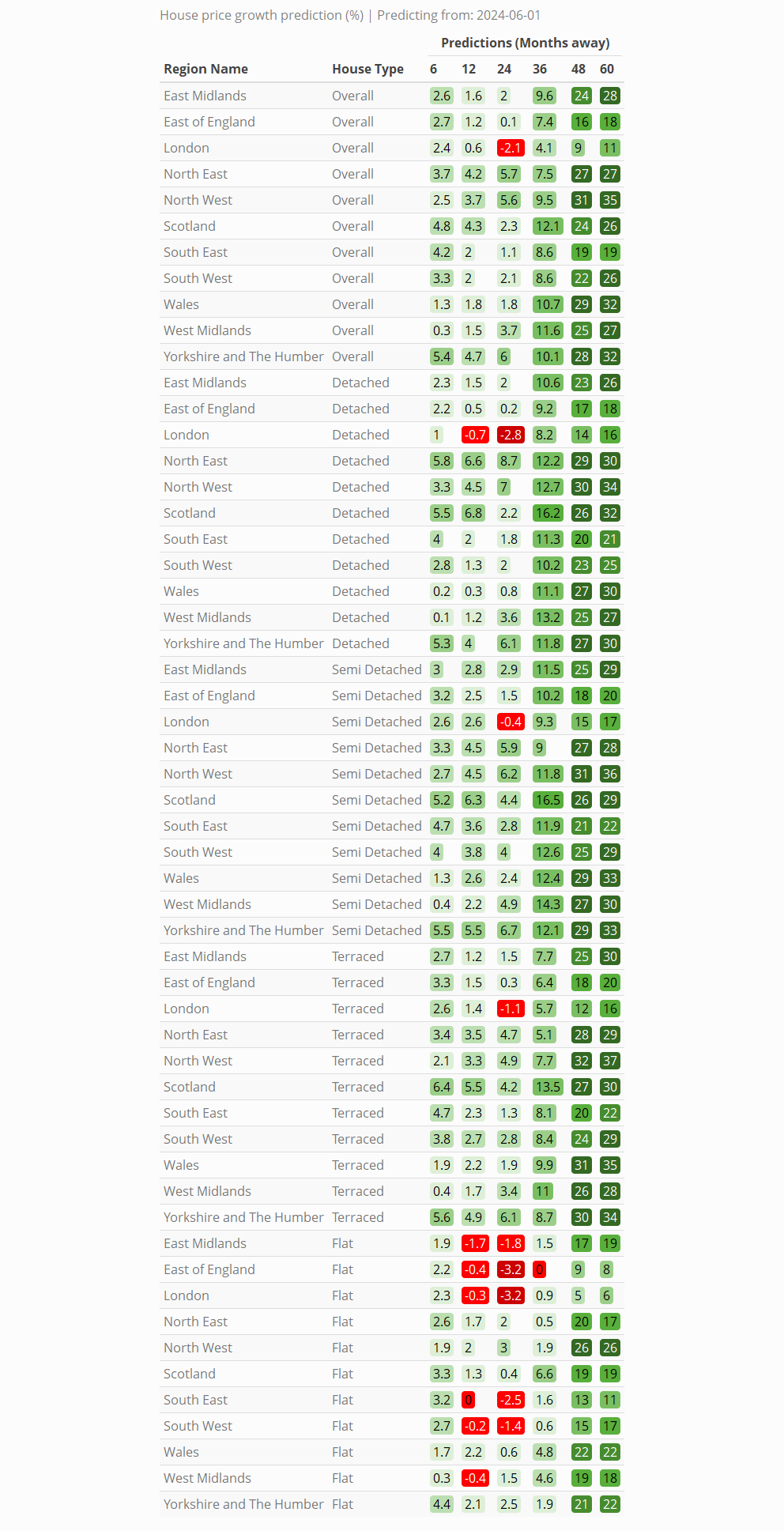
The regional breakdown of predictions highlights significant disparities in expected price changes. According to the predictions, London is set for a mixed performance, with a modest overall growth prediction of 2.4% over the next six months, but some segments of the market could experience a downturn. Detached homes in London, for instance, are expected to decline by 0.7% in the first 12 months, before rebounding later.
Scotland, on the other hand, is showing more promise, with growth predictions consistently higher than many other regions. Over the next 12 months, house prices in Scotland, overall, are expected to rise by 4.8%, with detached homes forecasted to grow by 5.5%. Other regions, such as the North East and Yorkshire, also show solid growth potential, driven by lower property prices compared to the South East and London.
However, the data also show potential negative growth in areas such as the East Midlands and East of England, especially for flats and terraced homes, suggesting these regions might face headwinds in the short term. This highlights the importance of both location and property type when evaluating market predictions.
The Winners and Losers
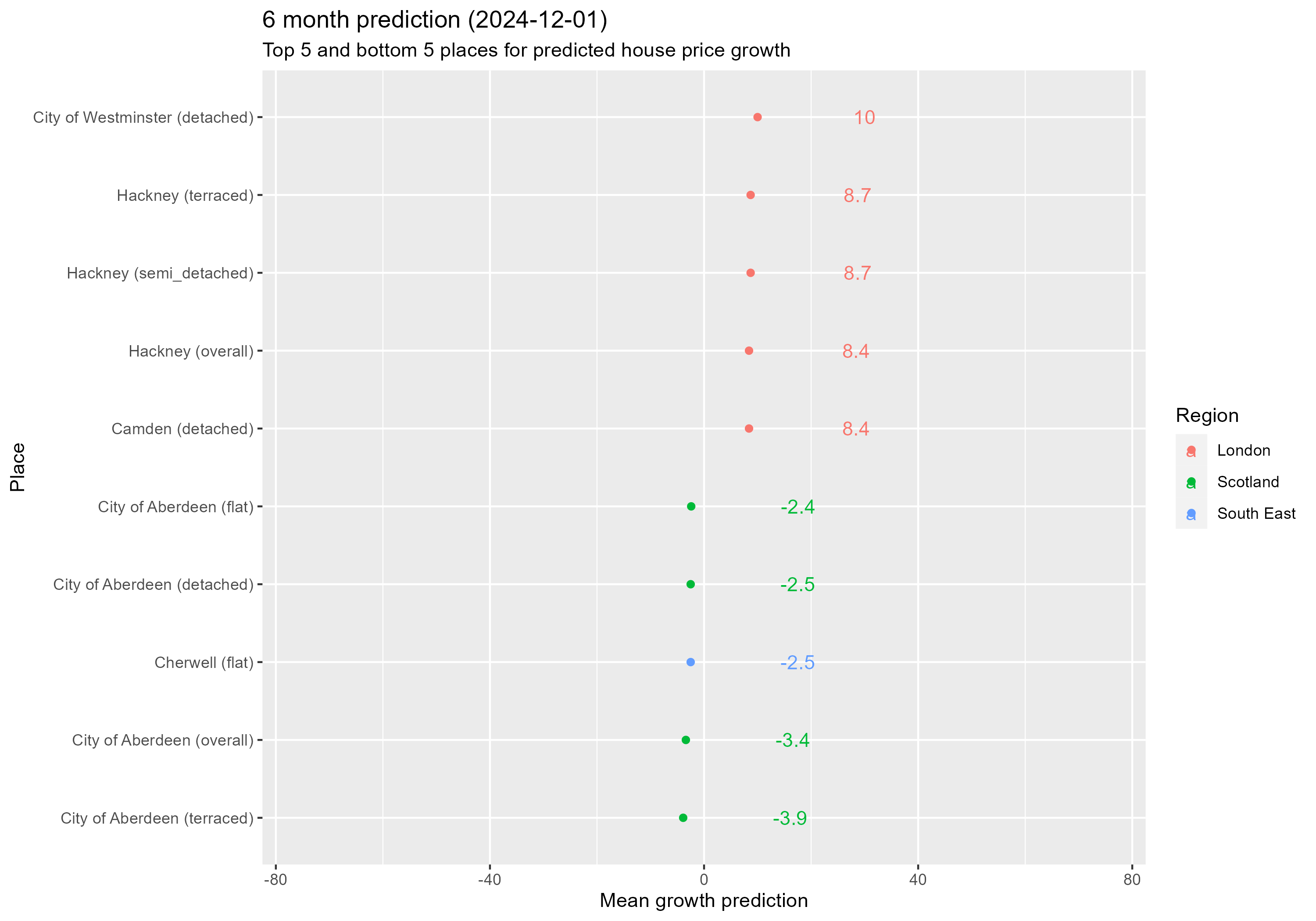
From the predictions, some areas are poised for substantial growth, while others might struggle in the coming years. Looking at the six-month forecast, Hackney, particularly terraced homes, stands out as a key “winner.” With a projected growth rate of 8.7% in some sectors, Hackney continues to benefit from its appeal as a vibrant, well-connected area in London. Other areas such as Westminster and Camden also show strong growth predictions, driven by continued demand for detached and semi-detached homes in prime central London locations.
On the other hand, areas like Aberdeen in Scotland could see a contraction in the near term. Predictions indicate that the City of Aberdeen’s housing market might shrink slightly, with overall growth predicted to be negative in some cases, such as flats declining by as much as -2.5% in the next six months.
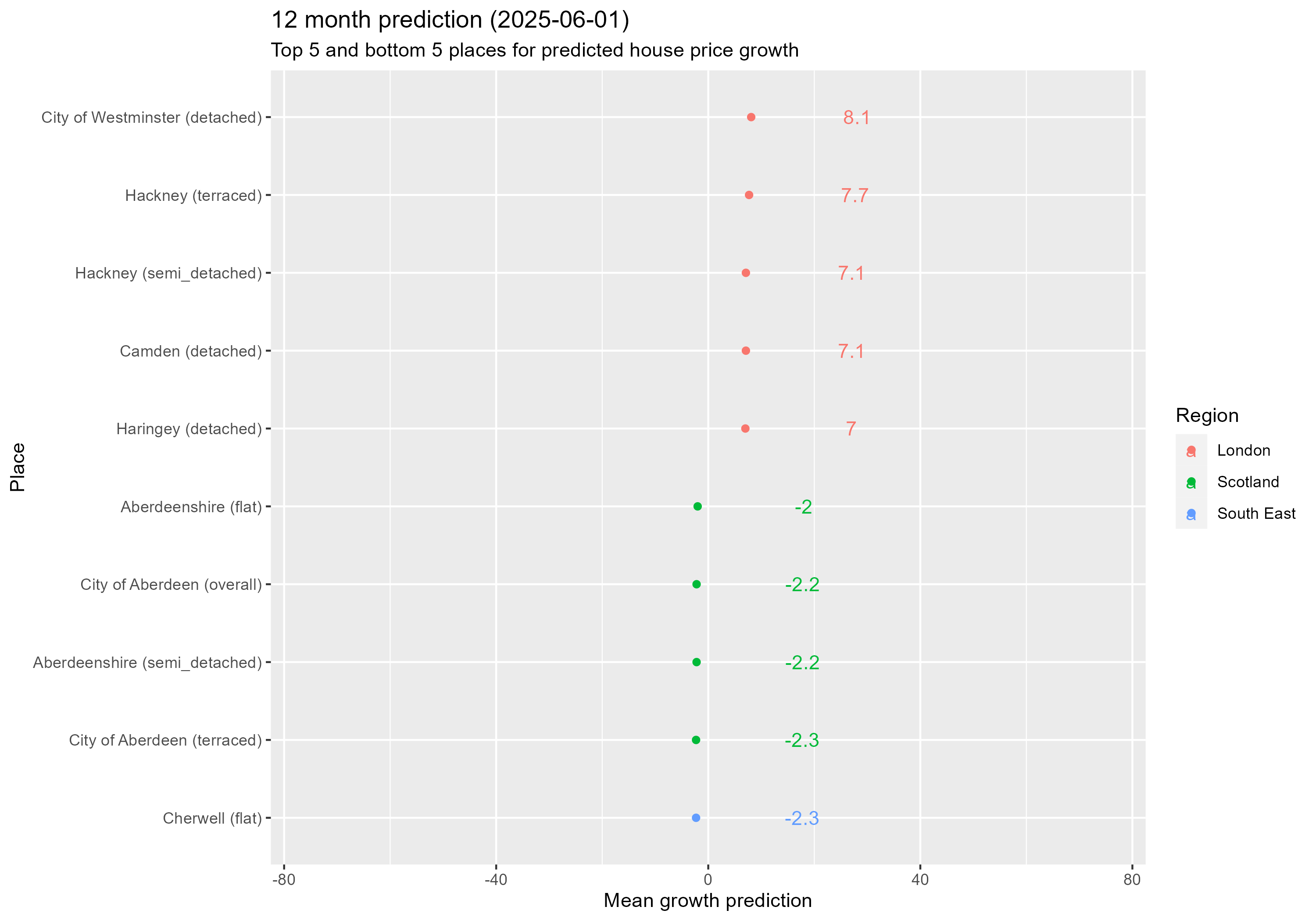
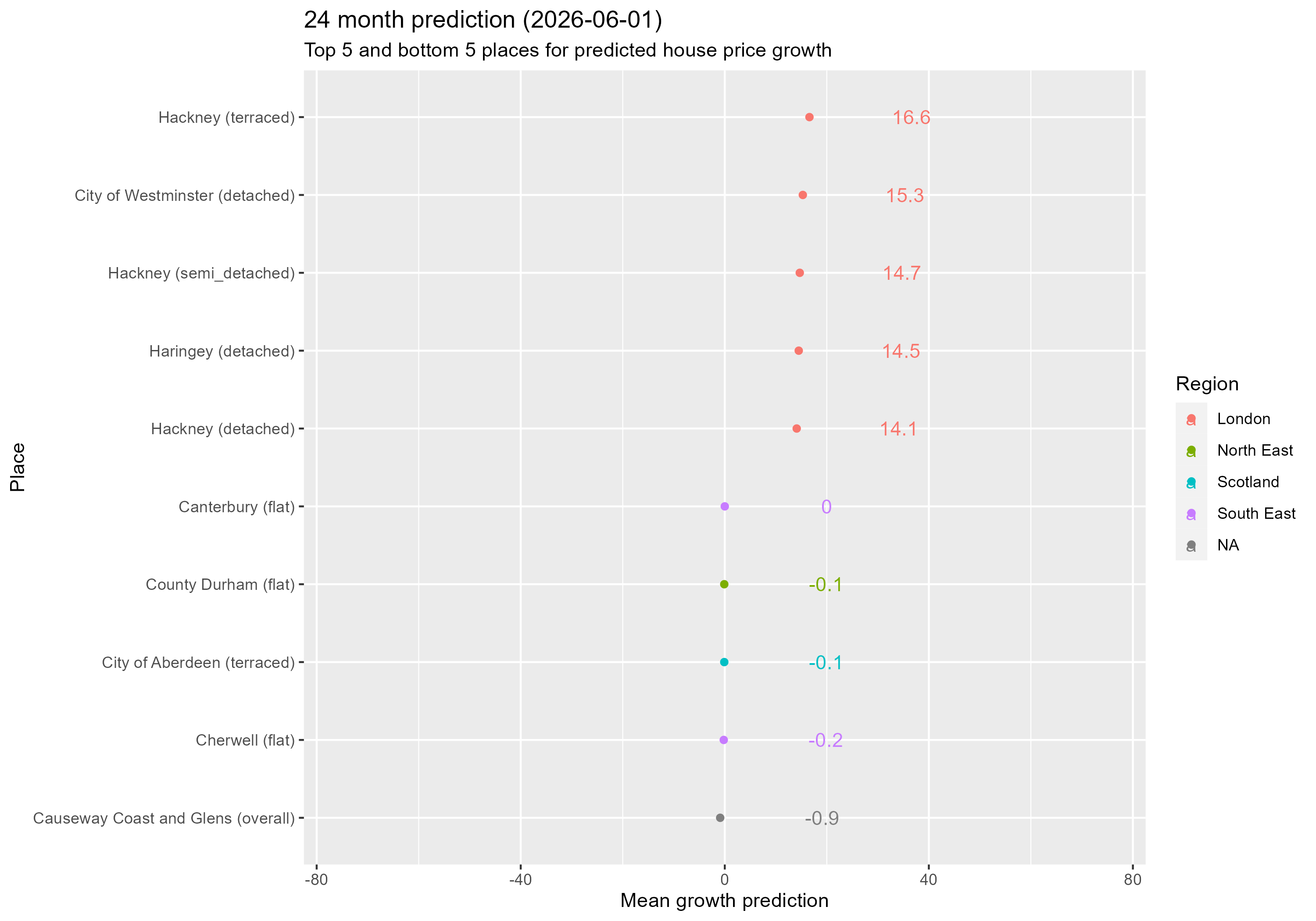
The longer-term predictions tell a similar story, with Hackney again leading the charge. In the 24-month forecast, Hackney’s terraced homes are predicted to experience a staggering 16.6% growth. Meanwhile, the North East’s County Durham, Scotland’s Aberdeen, and even Causeway Coast and Glens in Northern Ireland show negative or neutral growth over the same period.
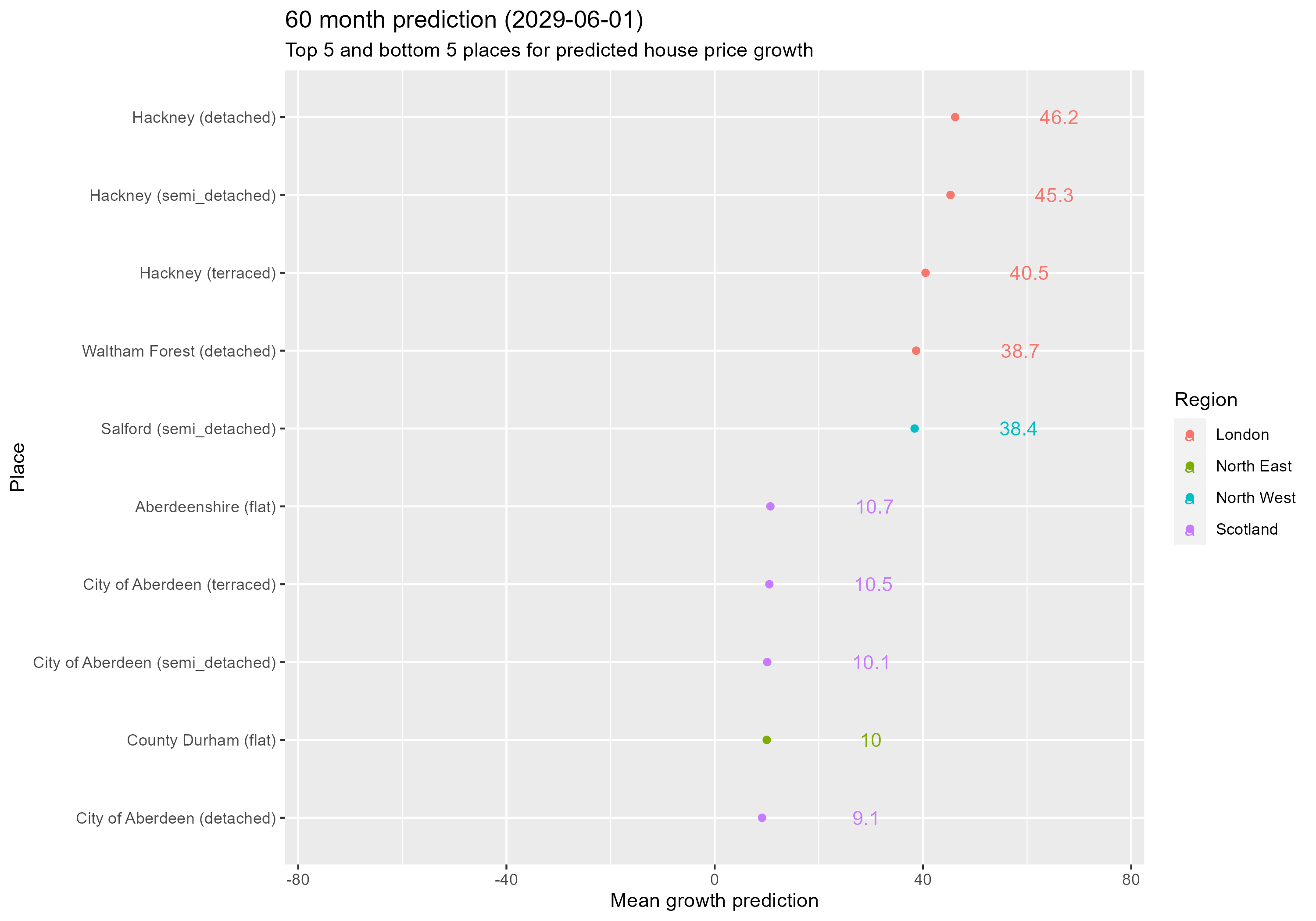
The five-year outlook shows even more pronounced disparities. Hackney’s housing market, particularly detached homes, could see growth exceeding 46%, while regions such as Aberdeenshire and Durham may face more muted increases, with flats in Aberdeenshire forecasted to grow by just 10.5%. The long-term regional variation underscores the importance of strategic investments, with London continuing to dominate in high-growth areas, while certain regions of Scotland and the North East face significant challenges.
In conclusion, the UK housing market remains diverse, with some areas expected to thrive, particularly in London, while others, such as Aberdeen, may face hurdles. Investors and homeowners should keep an eye on these regional trends and plan accordingly to navigate the complexities of the housing market over the next five years.

Leave a comment